Discover More


Looking for a reliable partner to digitize your warehouse operations? Aarmeh is a trusted warehouse management software development company in the UAE, helping distributors, retailers, and manufacturers replace manual spreadsheets and disconnected systems with a single, real-time source of truth for their stock, staff, and shipments. We don't hand you an off-the-shelf template and walk away. Our engineers sit with your operations team, map how goods actually move through your facility, and build software around that reality, so the tool fits the warehouse, not the other way around.

We offer end-to-end warehouse management software development services across the Middle East. Our services cover strategy, design, build, integration, and long-term support. This gives you one accountable partner from the initial planning to daily warehouse operations.
If your receiving, picking, or replenishment process doesn’t match how generic software expects it to work, custom warehouse management software development is the fix. We design every screen, rule, and report around your actual layout, SKU mix, and staffing model, rather than asking your team to adapt to someone else’s assumptions.
Our warehouse management system integration connects your warehouse platform with ERP, eCommerce, accounting, shipping, and order management systems, keeping inventory, orders, and fulfillment data synchronised across your operations.
Larger operations need more than a single-site tool. Our enterprise warehouse management software development supports multi-warehouse visibility, role-based permissions across regional teams, and centralised reporting, giving leadership one dashboard instead of a dozen disconnected spreadsheets.
With cloud based warehouse management software development, your team can check stock levels, approve transfers, or review dock schedules from a phone, a laptop, or a warehouse tablet, with no on-site server to maintain and automatic updates rolled out without downtime.
Stock accuracy is where most warehouses lose money quietly. Our warehouse inventory management software development gives you live counts by location, batch, and expiry date, catching discrepancies before they turn into stockouts, overstock, or failed audits.
To cut manual touchpoints further, our warehouse automation software development connects your WMS to conveyors, sorters, pick-to-light systems, or automated storage units, so routine tasks are triggered and tracked by the software rather than chased down on a clipboard.
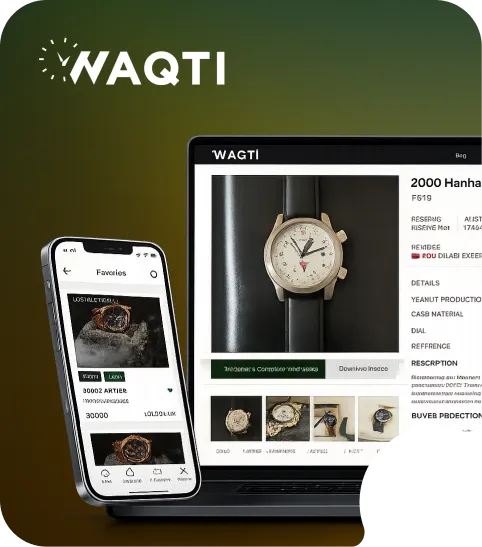
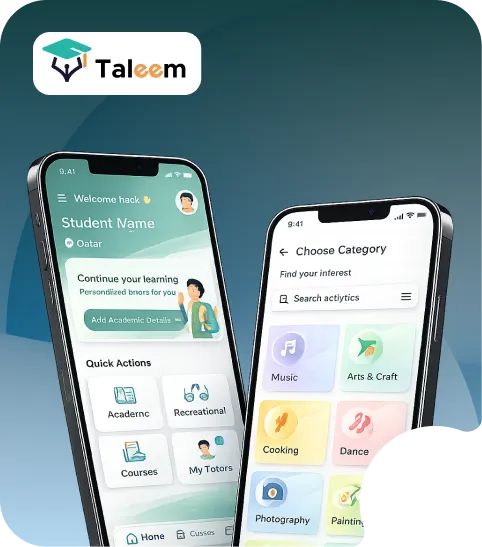
Our portfolio includes warehouse and inventory platforms built for distributors, third-party logistics providers, and retail supply chains across the Middle East region.




At Aarmeh, we leverage a modern, scalable, and future-ready technology stack to build high-performance warehouse management systems that deliver exceptional accuracy and long-term operational value. Our technology expertise enables us to create secure, cloud-native, AI-powered, and enterprise-grade warehouse solutions tailored to diverse industry requirements.


As a leading warehouse management software development company in Dubai, Aarmeh leverages advanced technologies to build intelligent, connected, and future-ready systems not just a digital version of a paper checklist, but software that actively helps your warehouse run itself.
AI-driven models forecast demand, flag slow-moving stock, and recommend the most efficient storage slot for every item, so decisions that used to rely on a manager’s gut feel are backed by actual movement data.
Connected sensors on forklifts, cold storage units, and shelving feed live temperature, location, and utilisation data straight into the WMS, catching issues like a failing chiller before they turn into spoiled stock.
A cloud-native foundation means your system scales automatically during peak season, stays accessible across every warehouse location, and never depends on a single on-site server that could go down mid-shift.
RPA handles repetitive back-office tasks purchase order matching, invoice reconciliation, routine stock reports freeing your team to focus on exceptions that actually need human judgment.
Barcode and RFID scanning remain the backbone of fast, accurate warehouse transactions, and we integrate both so receiving, picking, and cycle counts happen in seconds instead of minutes.
Every scan, transfer, and shipment generates data we turn into actionable dashboards, helping you spot bottlenecks, seasonal patterns, and staffing gaps well before they hit your bottom line.
Every warehouse runs differently depending on what moves through it, which is why generic software so often falls short. Our warehouse management solutions development is shaped around the specific pressures each industry faces from tight delivery windows to multi-client billing to batch-level traceability so the system you get actually matches how your sector operates, not a one-size-fits-all template stretched to fit.
Freight and distribution operators run on tight delivery windows, so our warehouse management software for logistics gives dock and floor teams live visibility into inbound shipments, outbound loads, and dock scheduling, cutting the guesswork that leads to missed pickup times and idle trucks.
For manufacturers and distributors, supply chain warehouse management software connects raw material intake, work-in-progress storage, and finished goods dispatch into one continuous view, instead of three separate systems that don’t talk to each other.
For online sellers, warehouse management software for ecommerce syncs stock across every sales channel in real time, so a product doesn't get sold twice because two marketplaces both showed it as available.
Retail operations use warehouse management software for retail to coordinate stock between a central distribution center and individual stores, reducing the manual reconciliation that usually happens at month-end.
On the production side, warehouse management software for manufacturing tracks raw materials into work orders and finished units out to storage, giving planners an accurate picture of what's actually available to build with.
Aarmeh builds warehouse management software for 3PL providers that need to run multiple client accounts under one roof, with separate billing rules, inventory ownership, and reporting for each customer, so nothing gets mixed up between accounts sharing the same facility.
Picking a development partner is about more than code. As a warehouse management system development company in UAE, Aarmeh pairs hands-on floor experience with technical depth, building systems around how your warehouse actually works, not assumptions made from a conference room.
Understanding how to develop warehouse management software properly means following a structured path that reduces risk at every stage, rather than jumping straight into coding.
We start our warehouse management software development process by documenting your current receiving, storage, picking, and dispatch workflows, identifying the specific bottlenecks the new system needs to solve.
Our warehouse management system development process continues with wireframes and data architecture planning, covering user roles, device requirements, and how the system will connect to your existing ERP or POS.
Developers build the platform in structured sprints, starting with core inventory and picking functionality before layering on integrations, reporting, and automation features.
Every build goes through functional testing on real barcode scanners and handheld devices, along with load testing to confirm the system holds up during peak order volumes, not just in a quiet demo environment.
We manage a phased rollout often starting with one zone or one warehouse so your team can adjust to the new system without disrupting live operations across the whole facility at once.
After go-live, we monitor system performance, roll out feature updates, and provide direct support to your warehouse managers as new requirements come up.

"The precision in their workflows has completely transformed how our team handles Australian compliance. It's not just software; it's a strategic advantage."

"Absolutely flawless execution. The atmospheric UI makes even the most complex data structures feel intuitive and breathable. A masterclass in SaaS design."

"Switching to Aura SaaS was the best decision we made this year. The support is world-class and the platform stability is unmatched in the industry."

"Aarmeh stands out for its family-like culture and consistently delivers high-quality results through teamwork."

"We are extremely pleased with the work. Your team has been exceptional, and Phase 1 is just the beginning."
Look for a partner that combines hands-on warehouse operations knowledge with experienced engineers. Aarmeh's team of 50+ builds custom, scalable systems that fit your actual workflow, backed by integration support and ongoing maintenance after launch.
Warehouse management software development in Dubai typically costs between $20,000 and $150,000+, depending on features, integrations, warehouse complexity, platforms, and customisation. A basic system may cost less, while advanced solutions with automation, real-time tracking, analytics, and ERP integrations require a higher development budget.
Timelines vary by scope, but most custom projects range from 3 to 7 months, depending on the number of integrations, facilities, and automation features involved.
Yes. Alongside the core system, we build mobile applications for scanning, picking, and stock checks, designed for handheld devices and barcode or RFID hardware used on the floor.
Yes, custom WMS software can support multiple warehouses across Dubai and the UAE, enabling centralised inventory management, transfers, reporting, and location-specific operations.
Yes. We offer ongoing maintenance, feature updates, and direct technical support to keep your warehouse management software running reliably as your operations grow.
Yes. WMS solutions can integrate barcode scanners, RFID systems, conveyors, automated storage, and other warehouse technologies to streamline tracking, picking, and inventory operations.
Yes. Every system is architected to handle growth from day one whether that means adding a second warehouse, doubling order volume, or connecting 5 or more new integrations down the line without requiring a rebuild.
Yes, Aarmeh develops custom WMS software for UAE businesses, tailored to your warehouse workflows, inventory needs, integrations, automation requirements, and operational goals.




© 2026 Aarmeh. all Rights Reserved.
Made in Dubai.
Made with  IN THE HEART OF UAE


 Book a free call
 CLUTCH VERIFIED
 Top App Developer UAE
 100% NDA Protected