





Table of Contents
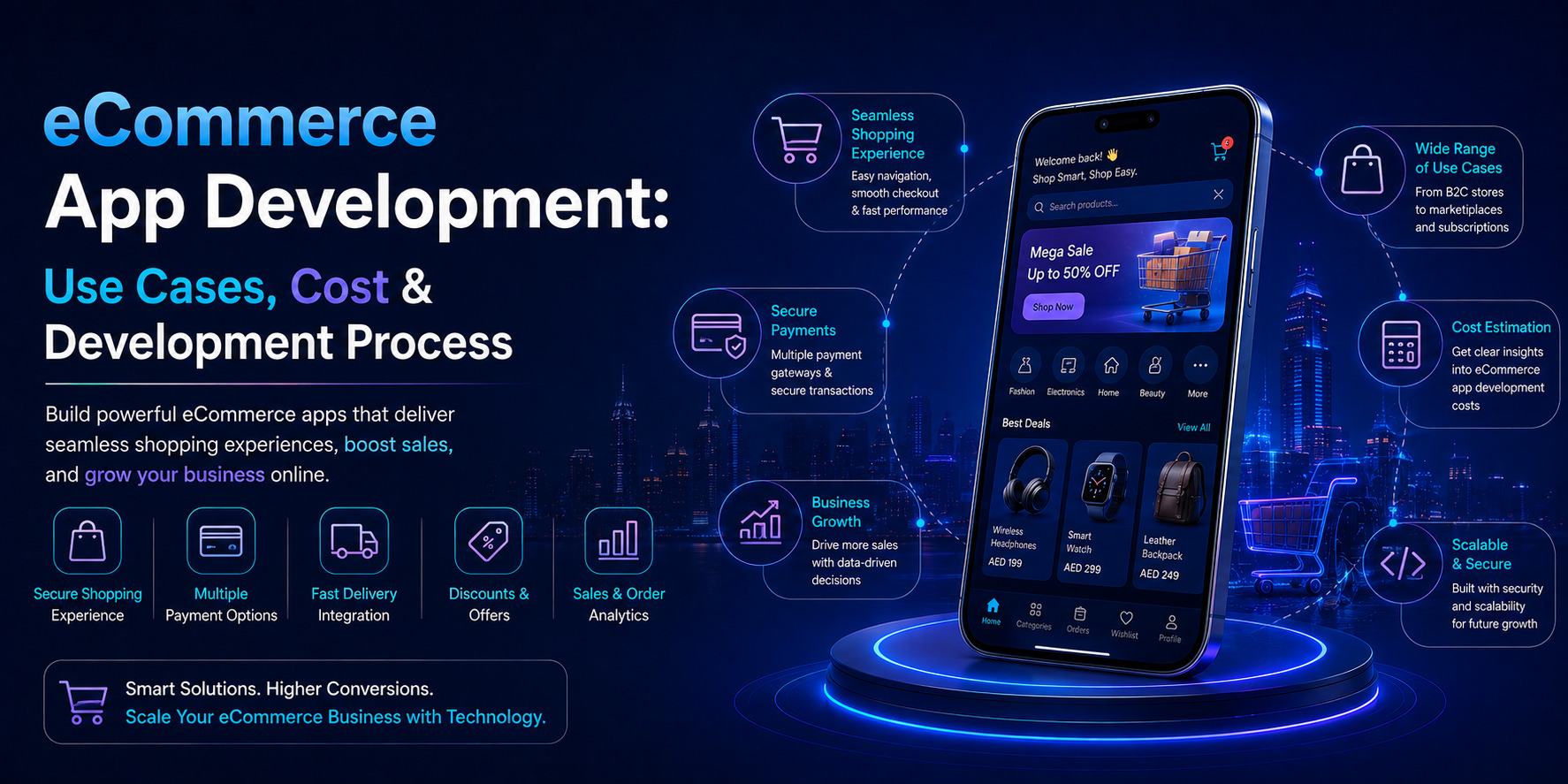
The rapid growth of mobile commerce has made eCommerce applications a critical sales channel for retailers, marketplaces, D2C brands, and service providers. A well-designed eCommerce app can simplify product discovery, personalize shopping experiences, support secure payments, and improve customer retention.
eCommerce App Development Market: Trends and Opportunities
According to the industry estimates, global retail eCommerce sales are expected to exceed $7 trillion by 2026, highlighting the growing opportunity for businesses investing in digital commerce. For companies targeting customers in the Middle East, eCommerce app development in the UAE has also become increasingly important as smartphone adoption, digital payments, and online shopping continue to expand.
Whether you are launching a marketplace, retail application, grocery platform, or D2C store, understanding the ecommerce app development cost, features, technology, and development process is essential.
What is eCommerce App Development?
eCommerce app development involves designing and building mobile applications that allow customers to browse products, compare prices, add items to carts, make payments, track orders, and communicate with sellers or support teams.
Modern applications can also integrate AI, recommendation engines, voice search, AR product visualization, chatbots, loyalty programs, and real-time analytics.
Businesses can work with an ecommerce app development company to create applications for Android, iOS, or both platforms. Depending on business requirements, companies can choose native Android App Development, iOS App Development, or cross-platform frameworks such as Flutter App Development and React Native App Development.
Why Invest in eCommerce Mobile App Development?
Mobile commerce provides businesses with a direct digital channel to customers. Unlike traditional websites, applications can use push notifications, personalized recommendations, location-based services, and loyalty programs to create continuous engagement.
Key benefits include:
- Direct customer engagement
- Personalized shopping experiences
- Faster checkout
- Push notifications
- Improved customer retention
- Secure mobile payments
- Real-time order tracking
- Customer behaviour analytics
- Personalized product recommendations
- Integration with loyalty programs
An experienced ecommerce mobile app development company can also build scalable applications capable of supporting increasing users, products, transactions, and geographic expansion.
Major Use Cases of eCommerce Apps
eCommerce applications support different business models and industries, from direct-to-consumer stores to multi-vendor marketplaces. Selecting the right use case helps businesses define the required features, monetization model, and eCommerce app development strategy.
-
B2C eCommerce Apps
B2C apps connect businesses directly with individual customers for browsing, purchasing, payments, and order tracking. They are commonly used by retailers and brands to deliver personalized online shopping experiences.
-
B2B eCommerce Apps
B2B applications help businesses purchase products or services from other businesses through digital platforms. Features such as bulk ordering, negotiated pricing, invoices, and account management are commonly required.
-
C2C Marketplace Apps
C2C marketplace apps allow individuals to buy and sell products directly with other users. User profiles, product listings, secure payments, messaging, ratings, and reviews are important components.
-
D2C Shopping Apps
D2C apps allow brands to sell directly to consumers without relying heavily on third-party retailers. These applications help brands control customer relationships, product presentation, promotions, and loyalty programs.
-
Multi-Vendor Marketplace Apps
Multi-vendor platforms bring multiple sellers and customers together through one application. Vendor dashboards, commission management, product listings, inventory, payments, and order management are essential features.
-
Grocery & Food Delivery Apps
Grocery and food delivery apps allow users to browse products or menus, place orders, make payments, and track deliveries. Real-time inventory, location tracking, delivery scheduling, and notifications support smooth operations.
-
Fashion & Lifestyle Shopping Apps
Fashion and lifestyle applications focus on product discovery, personalized recommendations, visual search, size guides, and easy checkout. Advanced apps can also integrate AI recommendations and AR-based product visualization.
-
Electronics & Consumer Goods Apps
Electronics and consumer goods apps help customers explore detailed product specifications, compare products, read reviews, and make informed purchases. Warranty information, product comparisons, secure payments, and order tracking can enhance the experience.
Exploring Various eCommerce Apps Categories
eCommerce apps can be categorized based on their shopping model, selling approach, and customer interaction. Choosing the right type helps businesses determine the required functionality, revenue model, technology, and overall eCommerce app development strategy.
-
Single-Store eCommerce Apps
These apps are built for a single retailer or brand to sell products directly through a dedicated mobile platform. Businesses have complete control over their product catalog, pricing, promotions, customer experience, and order fulfillment.
-
Marketplace eCommerce Apps
Marketplace applications bring multiple sellers together under one platform where customers can browse and purchase products from different vendors. The platform owner manages sellers, commissions, transactions, reviews, and overall marketplace operations.
-
Subscription-Based eCommerce Apps
Subscription apps allow customers to receive products or services at recurring intervals. They are suitable for businesses offering memberships, curated boxes, consumables, digital products, or repeat-purchase plans.
-
Social Commerce Apps
Social commerce applications combine shopping with social interaction, allowing customers to discover and purchase products through community-driven content. Social sharing, influencer promotions, user-generated content, and interactive product discovery can support engagement.
-
Mobile-First eCommerce Apps
These applications are designed primarily around smartphone shopping experiences, with simplified navigation, mobile payments, push notifications, and personalized recommendations. They help businesses provide a convenient shopping journey for mobile users.
-
Headless eCommerce Apps
Headless eCommerce separates the customer-facing interface from the backend commerce system. This architecture gives businesses greater flexibility to connect mobile apps, websites, kiosks, and other digital channels to the same commerce infrastructure.
-
Omnichannel eCommerce Apps
Omnichannel apps connect multiple customer touchpoints, such as mobile apps, websites, physical stores, and delivery channels. Customers can access consistent product information, pricing, inventory, and order services across different channels.
-
AI-Powered eCommerce Apps
AI-powered applications use artificial intelligence to enhance shopping experiences and automate business operations. They support personalized recommendations, intelligent search, chatbots, predictive analytics, fraud detection, and automated customer support.
MVP Features for eCommerce App Development
An MVP (Minimum Viable Product) allows businesses to launch an eCommerce application with essential functionality before investing in advanced features. A well-planned MVP helps validate the business idea, understand customer behavior, collect feedback, and identify which features should be prioritized in future releases.
-
User Registration & Login
Customers should be able to register using email, phone number, or social accounts. Secure authentication also enables personalized profiles, saved addresses, and order history.
-
Product Catalog
The MVP should include product categories, descriptions, pricing, images, availability, and basic specifications. A well-organized catalog makes product discovery easier for customers.
-
Search & Basic Filters
Search functionality allows users to quickly find products within the catalog. Basic filters such as category, price, brand, and availability can improve navigation.
4. Shopping Cart
Customers should be able to add, remove, and update products before checkout. The cart should clearly display item quantities, prices, discounts, shipping charges, and the final amount.
5. Secure Checkout & Payments
A simple checkout process should support address selection, order summary, and secure payment options. Integrating trusted payment gateways helps provide a reliable purchasing experience.
6. Order Management & Tracking
Customers should be able to place orders and view their status after purchase. Basic tracking can show stages such as confirmed, processed, shipped, and delivered.
7. Push Notifications
Push notifications can inform customers about order updates, promotions, discounts, and important account activity. They also provide an effective channel for post-purchase engagement.
8. Admin Dashboard
The MVP should provide an admin panel for managing products, customers, inventory, orders, payments, and basic content. This gives businesses control over essential eCommerce operations.
9. Customer Support
Basic customer support through FAQs, contact forms, chat, or support tickets can help users resolve common shopping and order-related issues.
10. Basic Analytics
Analytics can track essential metrics such as product views, orders, conversions, revenue, and customer activity. These insights help businesses decide which features to develop next.
Selecting the Best Monetization Strategy for Your eCommerce App
Choosing the right monetization strategy is important for generating sustainable revenue from an eCommerce application. The ideal model depends on the business type, target audience, product category, and overall eCommerce app development strategy.
1. Commission-Based Model
Marketplace apps can charge sellers a fixed fee or percentage of every successful transaction. This model works well for platforms connecting multiple vendors with customers.
2. Subscription Model
Businesses can offer premium memberships with benefits such as free delivery, exclusive discounts, early access, or loyalty rewards. Recurring subscription fees can create a predictable revenue stream.
3. Listing Fees
Multi-vendor platforms can charge sellers for listing products on the application. Additional fees can be introduced for premium listings, featured products, or increased product visibility.
4. Advertising & Sponsored Listings
Sellers and brands can pay to promote products through banners, sponsored search results, featured placements, or personalized campaigns. This creates an additional revenue channel alongside product sales.
5. Freemium Model
Businesses can provide basic shopping or seller functionality for free while charging for advanced tools and premium features. This approach can help attract users before encouraging them to upgrade.
6. Delivery & Convenience Fees
Businesses can charge customers for express delivery, scheduled delivery, premium packaging, or other convenience-based services. These fees can supplement revenue generated from product sales.
7. Affiliate Revenue
An eCommerce platform can earn commissions by promoting third-party products or services and directing customers to external merchants. Revenue is generated when users complete qualifying purchases.
Key Features Every eCommerce App Should Include
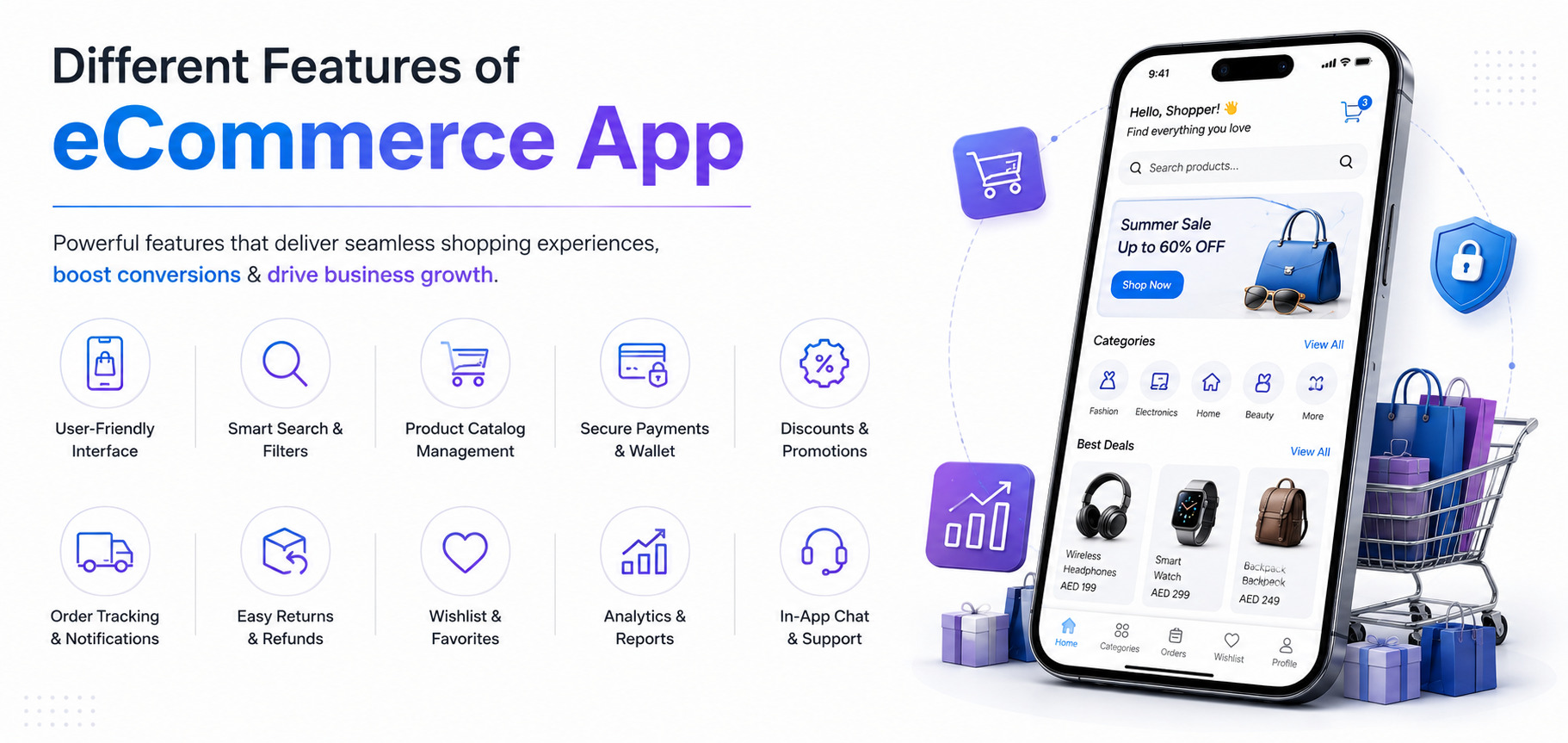
A successful application should combine customer-facing features with administrative and merchant capabilities.
Customer Features
-
Core eCommerce App Features:
User registration and social login, product search and advanced filters, categories, detailed product pages with images/videos, wishlist, shopping cart, product comparison, ratings and reviews, and personalized shopping experiences.
-
Shopping & Customer Support Features:
Multiple payment options, coupons and discounts, order tracking, address management, returns and refunds, push notifications, customer support, and loyalty programs are essential eCommerce app features for a seamless shopping journey.
Admin Features
-
Business Management Features:
Product and inventory management, order management, and customer management help businesses organize catalogs, monitor stock, process orders, and manage customer information efficiently within their eCommerce app development solution.
-
Sales & Content Management:
Payment management, discount and coupon management, analytics and reporting, and content management help streamline transactions, promotions, performance tracking, and in-app content. These are essential eCommerce app features for efficient business operations.
Vendor Features for Marketplace Apps
-
Vendor & Product Management:
Vendor registration, product listing, and inventory management enable sellers to create profiles, showcase products, update stock levels, and manage their catalogs efficiently within eCommerce app development.
-
Orders & Earnings Management:
Order processing and earnings and payout tracking help vendors manage purchases, monitor order status, and track their revenue and payouts. These are essential eCommerce app features for a multi-vendor marketplace.
AI-Driven Trends Shaping the Future of eCommerce App
Artificial intelligence is reshaping eCommerce by making shopping experiences more personalized, automated, and data-driven. As part of modern eCommerce app development, businesses can use AI to understand customer behavior, optimize operations, improve conversions, and provide faster support.
-
Personalized Product Recommendations:
AI analyzes browsing history, purchases, searches, and preferences to recommend relevant products. This can improve product discovery and encourage repeat purchases.
-
AI Shopping Assistants:
AI-powered shopping assistants can help customers find products, compare options, answer questions, and guide them through the buying journey.
-
Intelligent Search:
AI can understand natural-language queries, spelling variations, and customer intent to deliver more relevant search results. Voice and visual search can further simplify product discovery.
-
AI Chatbots:
AI chatbots can provide 24/7 assistance for product queries, order status, returns, refunds, and frequently asked questions. This reduces the workload on customer support teams.
-
Dynamic Pricing:
AI can analyze demand, inventory levels, competitor pricing, and customer behavior to help businesses adjust prices more strategically.
-
Fraud Detection:
Machine learning models can identify unusual transaction patterns and flag potentially fraudulent activities. This can strengthen payment security and reduce financial risks.
-
Predictive Inventory Management:
AI can forecast demand using historical sales, seasonal trends, and customer behavior. Businesses can use these insights to maintain suitable inventory levels and reduce stockouts or overstocking.
-
Automated Customer Support:
AI can automate repetitive support tasks, including FAQs, order updates, cancellations, and basic troubleshooting. Complex queries can then be transferred to human agents.
-
Demand Forecasting:
AI-powered analytics can predict future demand and help businesses optimize purchasing, inventory, staffing, and delivery operations.
-
Visual Product Experiences:
AI combined with AR can allow customers to visualize products in real-world environments before purchasing. This can be especially useful for furniture, fashion, beauty, and home décor businesses.
For businesses investing in AI App Development, these capabilities can be integrated into their eCommerce app features to create smarter shopping experiences, improve operational efficiency, and support long-term digital commerce growth.
How Much Does It Cost to Build an eCommerce App?
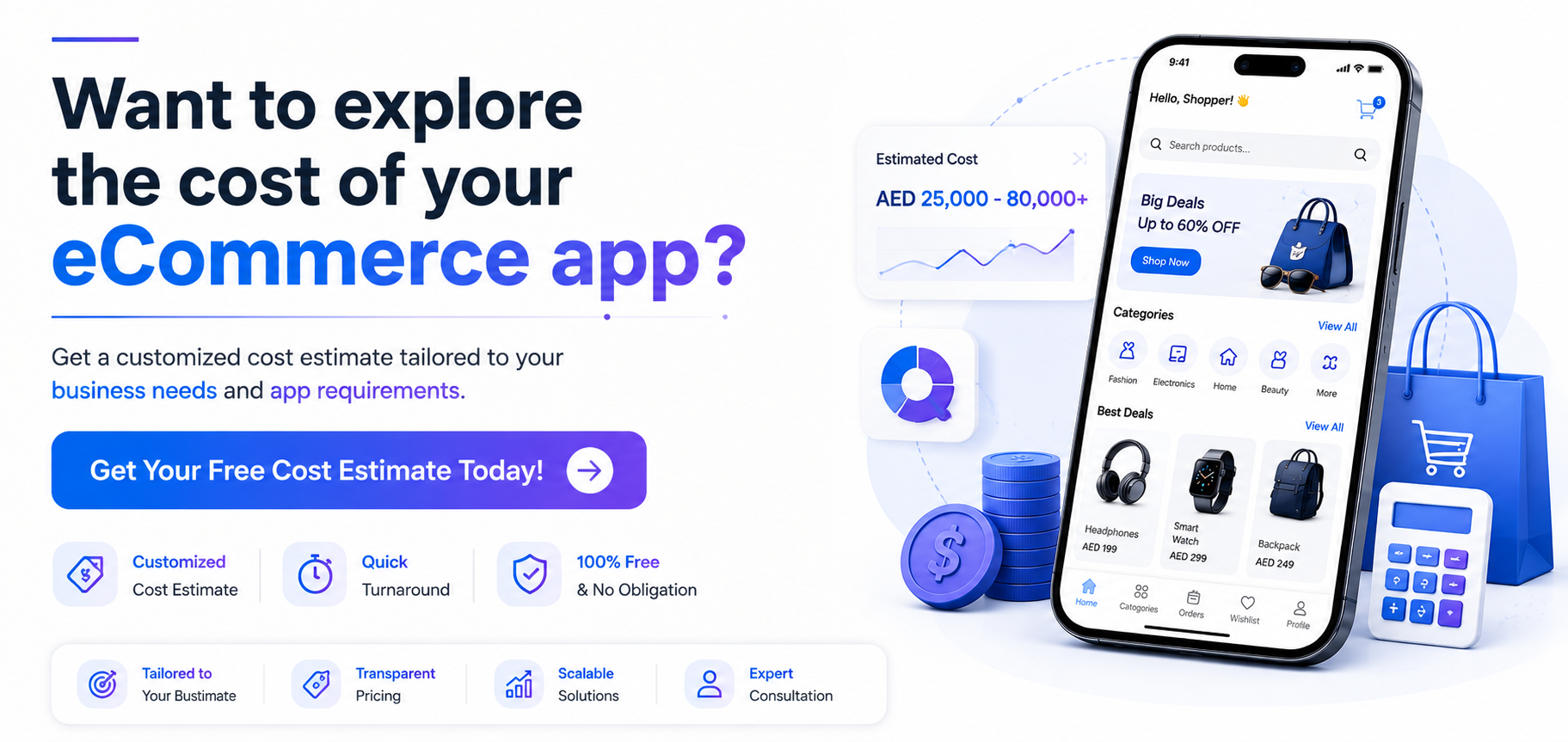
The ecommerce app development cost depends on application complexity, platform selection, UI/UX design, third-party integrations, security requirements, development location, and advanced technologies. A typical estimate can be structured as follows:
| App Type | Estimated Cost | Development Time |
| Basic eCommerce App | $20,000–$40,000 | 3–5 months |
| Mid-Level App | $40,000–$80,000 | 5–8 months |
| Advanced eCommerce App | $80,000–$150,000+ | 8–12 months |
| AI-Powered Enterprise App | $150,000–$300,000+ | 10–16+ months |
Overall, the cost to build an ecommerce app can range from approximately $20,000 to $300,000+, depending on the project scope and technical requirements. For businesses considering ecommerce app development Dubai, factors such as local development rates, compliance requirements, payment gateways, logistics integrations, Arabic language support, and UAE-specific customer expectations can further influence the overall budget.
Beyond the initial investment, businesses should also account for long-term maintenance. eCommerce app maintenance services may typically require around 15–25% of the initial development cost annually for bug fixes, security updates, performance optimization, infrastructure management, and feature improvements. For instance, an application developed for $80,000 could require approximately $12,000–$20,000 per year for ongoing maintenance, monitoring, security updates, and enhancements.
Key Factors That Shape eCommerce App Development Costs
The ecommerce app development cost varies based on the project scope, technical complexity, business requirements, and development approach. The following factors can significantly influence the overall budget:
-
Number of Features
The number and complexity of features directly affect development time, resources, and cost. Basic shopping features require less investment than advanced capabilities such as AI recommendations, multi-vendor management, or real-time tracking.
-
Design Complexity
A simple interface is generally faster to design and develop than a highly customized experience with animations, interactive elements, and personalized user journeys. Advanced UI/UX requirements can increase both design and development costs.
-
Platforms
Developing an app for a single platform can require less investment than supporting both Android and iOS. Businesses can also consider cross-platform technologies such as Flutter or React Native to streamline development.
-
Development Team Location
Developer rates differ depending on geographic location, expertise, and project complexity. The location and experience of the selected development team can therefore have a significant impact on the overall eCommerce app development cost.
-
Third-Party Integrations
Payment gateways, CRM, ERP, logistics, shipping, analytics, maps, and marketing integrations require additional development and testing. The number and complexity of these integrations can increase the project budget.
-
Backend Complexity
A simple backend may be sufficient for a small online store, while large marketplaces require scalable databases, APIs, cloud infrastructure, inventory systems, and advanced order management. More complex backend architecture generally requires greater development investment.
-
AI/AR Features
AI-powered recommendations, chatbots, visual search, predictive analytics, and AR product visualization require specialized technologies and development expertise. Integrating these advanced capabilities can substantially increase the overall cost.
-
Security and Compliance
Strong encryption, authentication, secure payment processing, fraud detection, data protection, and compliance requirements add development and testing effort. These measures are essential for protecting customer and business information.
-
Maintenance Requirements
Post-launch maintenance includes bug fixes, security updates, OS compatibility, API updates, performance optimization, and new feature development. Businesses should include ongoing eCommerce app maintenance services when planning their long-term budget.
Step-by-Step Journey of eCommerce App Development
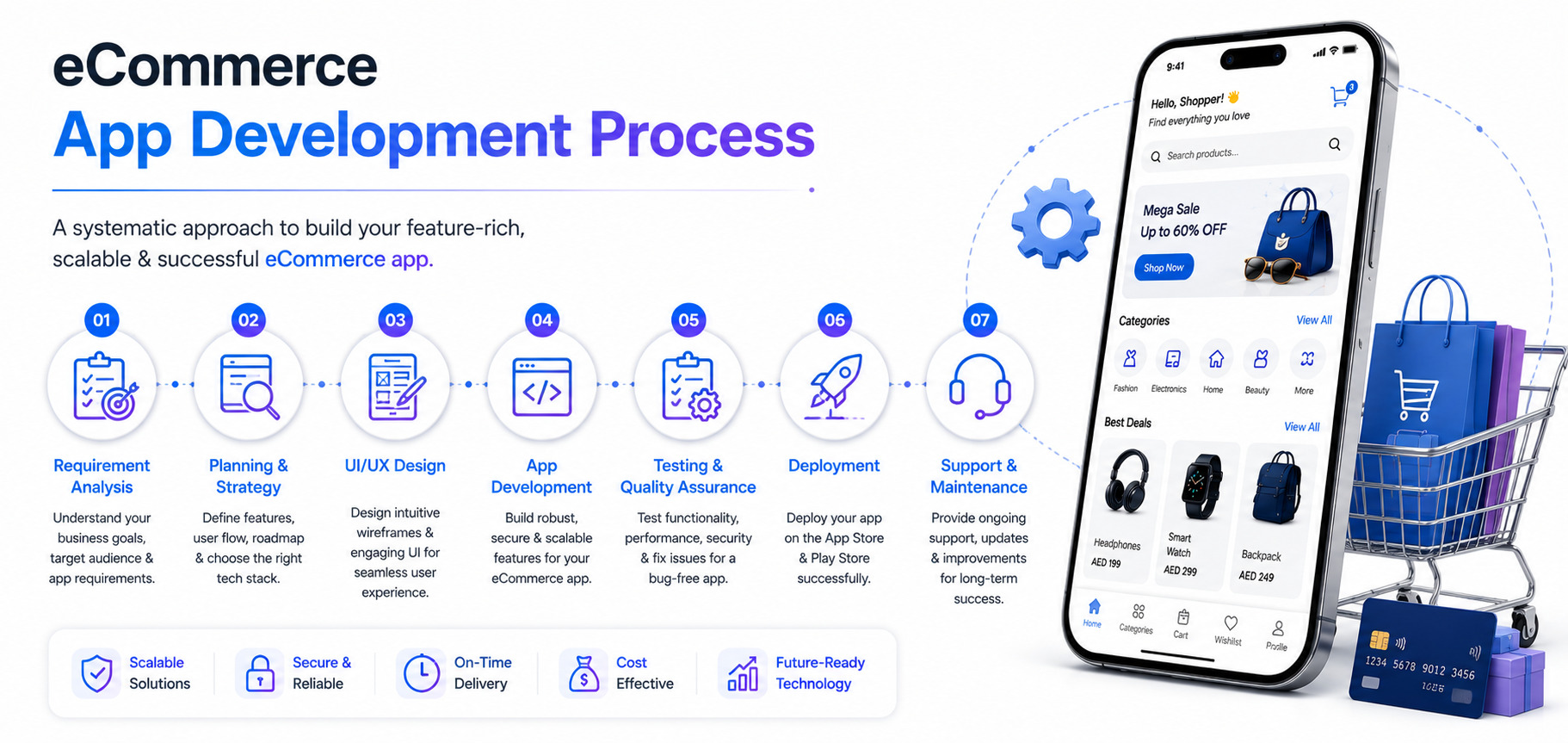
A structured eCommerce app development process reduces technical risks and helps businesses launch faster.
-
Business Analysis and Discovery
The first step is understanding the target market, business model, customers, competitors, monetization strategy, and application requirements.
The development team defines the MVP scope, user journeys, technical requirements, and measurable business goals.
-
UI/UX Design
Designers create wireframes, prototypes, navigation structures, and visual interfaces.
The goal is to create a simple shopping journey from product discovery to checkout.
-
Technology Selection
The team selects the appropriate eCommerce app tech stack based on scalability, performance, security, budget, and platform requirements.
-
Application Development
Developers build the frontend, backend, APIs, database, authentication, payment integrations, product management, order processing, and other required modules.
-
API & Third-Party Integrations
An eCommerce application can connect with payment gateways, CRM and ERP platforms, inventory management, shipping providers, maps, analytics, marketing automation, and customer support systems. These integrations are essential ecommerce app development services that streamline operations, enhance customer experiences, and support scalable eCommerce app development.
-
eCommerce App Testing
eCommerce app testing ensures seamless performance across devices, operating systems, networks, and user scenarios through functional, UI, performance, security, API, payment, compatibility, usability, load, and regression testing. A reliable ecommerce app development company uses comprehensive testing to deliver secure, scalable, and high-performing applications.
-
eCommerce App Deployment
After testing and approval, the application is prepared for eCommerce app deployment on the Apple App Store and Google Play Store.
The deployment stage also includes production server configuration, analytics setup, monitoring, app-store compliance, and release management.
-
eCommerce App Maintenance
Development continues beyond launch, as eCommerce app maintenance services help businesses maintain performance, security, compatibility, and functionality through bug fixing, security updates, OS compatibility, server monitoring, and performance optimization. An experienced ecommerce app development company also manages database updates, API enhancements, new features, and analytics monitoring for long-term growth.
The Architecture Behind a High-Performance eCommerce App
A scalable eCommerce app architecture generally consists of multiple interconnected layers.
| Layer | Key Components |
| Presentation | Android/iOS app, web interface |
| Application | Business logic and APIs |
| Backend | Authentication, orders, payments |
| Database | Users, products, orders, inventory |
| Integration | Payment, logistics, CRM, ERP APIs |
| Cloud | Hosting, storage, CDN |
| Security | Encryption, authentication, monitoring |
| Analytics | User behavior, sales, conversion data |
For larger marketplaces, microservices architecture can help independently scale services such as payments, inventory, search, recommendations, and order management.
A Scalable Tech Stack for eCommerce App Development
The right technology depends on the application requirements and expected scale.
| Component | Technologies |
| iOS | Swift, SwiftUI |
| Android | Kotlin |
| Cross-Platform | Flutter, React Native |
| Frontend | React.js, Next.js |
| Backend | Node.js, Python, Java, .NET |
| Database | PostgreSQL, MongoDB, Firebase |
| Cloud | AWS, Microsoft Azure, Google Cloud |
| AI/ML | OpenAI, TensorFlow, PyTorch |
| APIs | REST, GraphQL |
| Payments | Stripe, PayPal, regional gateways |
| Analytics | Google Analytics, Firebase, Mixpanel |
For businesses that want a single codebase across platforms, Flutter App Development and React Native App Development can reduce development duplication. However, native development may be preferred where advanced platform-specific performance or capabilities are required.
What Challenges Can Impact eCommerce App Development?
Data Security and Privacy:
Protecting customer information, payment details, and personal data requires strong encryption, authentication, and compliance measures.
Payment Integration:
Supporting multiple payment gateways, currencies, wallets, and transaction methods can make development more complex.
Scalability:
An eCommerce app must handle growing users, products, orders, and traffic without compromising performance or reliability.
Third-Party Integrations:
Connecting CRM, ERP, inventory, logistics, analytics, and shipping systems can create compatibility and synchronization challenges.
Seamless User Experience:
Complicated navigation, slow loading, or lengthy checkout processes can increase cart abandonment and reduce conversions.
Cross-Platform Compatibility:
Ensuring consistent performance across different Android and iOS devices, screen sizes, and operating systems requires extensive testing.
Inventory Synchronization:
Real-time synchronization between the app, warehouse, and backend systems is essential to prevent inaccurate stock information.
AI Implementation:
Integrating recommendations, chatbots, fraud detection, and predictive analytics requires quality data, suitable models, and reliable infrastructure.
App Performance:
Large product catalogs, high-resolution images, real-time tracking, and multiple integrations can affect loading speed and responsiveness.
Ongoing Maintenance:
Regular security patches, OS updates, API changes, bug fixes, and feature enhancements are necessary to keep the app competitive and reliable.
Key Considerations for eCommerce App Development in the UAE
Businesses targeting the UAE need to consider regional customer expectations and operational requirements.
For eCommerce app development UAE, businesses should consider:
- Arabic and English language support
- AED currency support
- Local payment gateways
- Secure online payments
- UAE data protection requirements
- Local delivery integrations
- VAT-related considerations
- Location-based delivery
- Multi-vendor capabilities
- Customer support integrations
For companies targeting Dubai, choosing an experienced ecommerce app development company in Dubai can help simplify localization, integration, and market-specific development requirements.
Choosing the Right eCommerce App Development Partner
Building an eCommerce application involves more than creating product pages and checkout screens. Performance, security, payment processing, scalability, inventory synchronization, and customer experience all affect business success.
A professional development partner can help businesses:
- Reduce technical risks
- Build scalable architecture
- Improve application security
- Integrate third-party services
- Optimize shopping experiences
- Implement AI capabilities
- Support multiple platforms
- Manage application deployment
- Provide long-term maintenance
Partner With Aarmeh for Next-Gen eCommerce App Development
Aarmeh is a trusted ecommerce app development company delivering secure, scalable, and user-focused digital commerce solutions.
Our experienced team combines modern technologies, AI, cloud, and robust eCommerce app architecture to build high-performing applications tailored to business goals.
From UI/UX design and development to testing, deployment, and eCommerce app maintenance services, we manage the complete development lifecycle.
Whether you need Android App Development, iOS App Development, Flutter App Development, or AI-powered solutions, Aarmeh helps businesses create seamless shopping experiences that drive growth.
Final Thoughts on eCommerce App Development
eCommerce applications have evolved into sophisticated digital commerce platforms that combine shopping, payments, personalization, logistics, analytics, and AI. From basic online stores to enterprise marketplaces, businesses can select an application model based on their target audience, budget, and growth objectives.
The ecommerce app development cost can range from $20,000 to $300,000+, while development timelines can extend from 3 to 16+ months depending on complexity. A structured eCommerce app development process, scalable architecture, appropriate tech stack, rigorous testing, and ongoing maintenance are essential for long-term performance.
Whether you need Android App Development, iOS App Development, cross-platform development, AI App Development, or a complete retail ecosystem, choosing the right ecommerce mobile app development company can help transform your idea into a scalable digital commerce solution.
Frequently Asked Questions (FAQs)
Q. How much does it cost to build an eCommerce app?
The cost to build an eCommerce app typically ranges from $20,000 to $300,000+, depending on features, platforms, integrations, UI/UX complexity, AI capabilities, and security requirements.
Q. How long does eCommerce app development take?
The eCommerce app development process can take around 3–16+ months. A basic MVP may take 3–5 months, while advanced or AI-powered applications can require 10–16+ months.
Q. What are the essential eCommerce app features?
Important eCommerce app features include product search, filters, product catalogs, shopping carts, wishlists, secure payments, order tracking, reviews, push notifications, customer support, and personalized recommendations.
Q. Which technology is best for eCommerce app development?
The right eCommerce app tech stack depends on project requirements. Businesses can use Swift for iOS, Kotlin for Android, or Flutter App Development and React Native App Development for cross-platform applications.
Q. How can I choose an eCommerce app development company?
Choose an ecommerce app development company with experience in scalable architecture, secure payment integration, UI/UX, testing, deployment, AI integration, and eCommerce app maintenance services.


 Book a call




 CLUTCH VERIFIED
 Top App Developer UAE
 100% NDA Protected
 IN THE HEART OF UAE