





Table of Contents
The healthcare industry in Dubai is rapidly embracing digital transformation. From AI-powered diagnostics to telemedicine consultations and remote patient monitoring, healthcare, mobile apps are reshaping patient care and hospital operations across the UAE.
Exploring Healthcare App Development Landscape in Dubai, UAE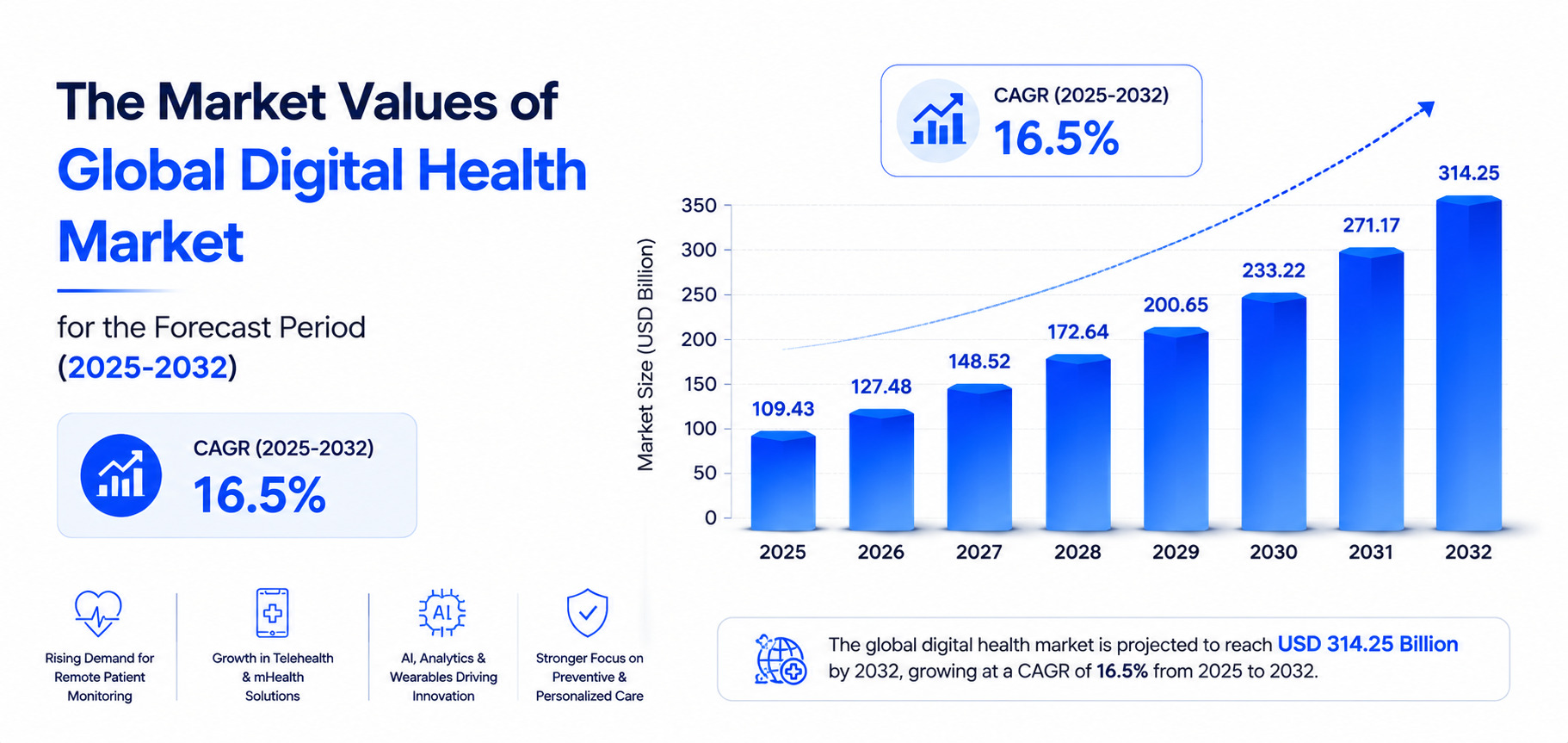
According to industry reports, the global digital health market is expected to exceed USD 1 trillion by 2032, while the telemedicine market is projected to grow over 20% CAGR. Dubai’s Smart City initiative, the Dubai Health Strategy, and increasing investments in AI have accelerated demand for Healthcare App Development solutions.
Whether you’re a startup, hospital, clinic, insurance company, or healthcare provider, investing in Healthcare Application Development has become essential for delivering patient-centric care.
This comprehensive guide covers everything you need to know about Healthcare App Development in Dubai, including development cost, features, compliance requirements, AI capabilities, and selecting the right Healthcare App Development Company in Dubai.
Why Healthcare Apps Are Growing in Dubai
Dubai has become one of the Middle East’s leading healthcare technology hubs due to several factors:
- Government-led digital healthcare initiatives
- Growing adoption of electronic medical records (EMR)
- Increasing smartphones penetration (over 95%)
- Rising demand for virtual healthcare services
- Expansion of private hospitals and specialty clinics
- Medical tourism growth
Healthcare providers now invest heavily in Healthcare Mobile App Development to improve patient engagement, streamline operations, and reduce administrative costs.
Healthcare Mobile App Market at a Glance
| Metric | Value |
| Smartphone penetration in UAE | 95%+ |
| Internet penetration | 99% |
| Telemedicine Market CAGR | 20%+ |
| Expected Digital Health Market (2032) | USD 1 Trillion+ |
| Average Patient Preference for Online Booking | Over 70% |
| AI in Healthcare Market CAGR | Around 35% |
These trends continue driving demand for custom healthcare app development solutions across Dubai.
Types of Healthcare Apps Built in Dubai, UAE
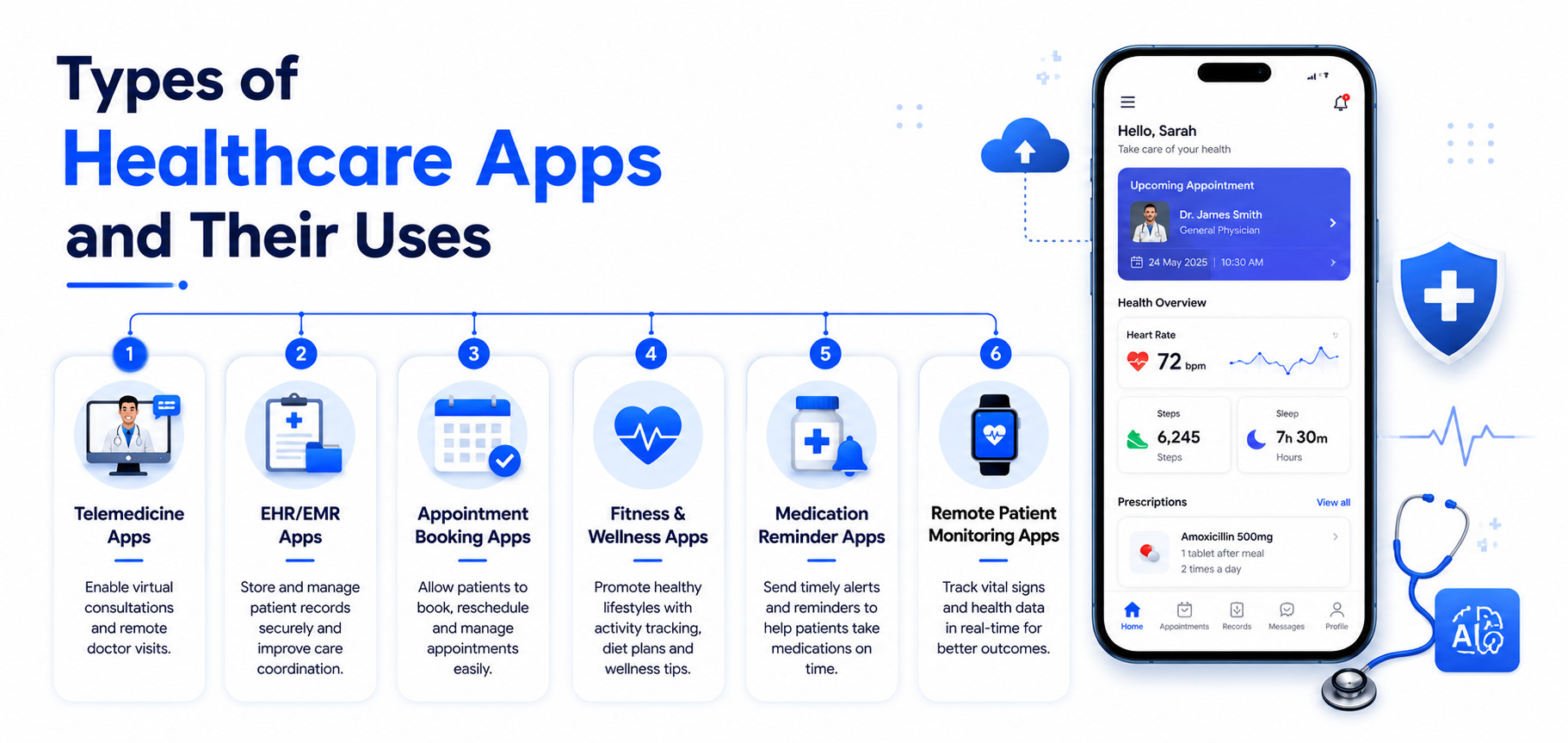
Different healthcare organizations require different applications depending on their services.
| App Type | Primary Users |
| Hospital Management Apps | Hospitals |
| Clinic Apps | Clinics |
| Doctor Appointment Apps | Patients & Doctors |
| Telemedicine Apps | Healthcare Providers |
| Pharmacy Apps | Pharmacies |
| Fitness & Wellness Apps | Consumers |
| Chronic Disease Monitoring Apps | Patients |
| Mental Health Apps | Therapists |
| Medical Imaging Apps | Hospitals |
| Home Healthcare Apps | Home Care Providers |
Among these, telemedicine app development has witnessed the fastest adoption after remote healthcare became mainstream.
Top Healthcare App Features for Seamless User Experience
Successful healthcare mobile apps prioritize usability, security, and patient engagement.
Patient Features
- Patient Registration & Health Records
Patients can securely register, create personalized profiles, and manage their medical history in one place. The app also provides easy access to digital reports, enabling users and healthcare providers to view and share health records whenever needed.
- Appointments & Patient Care
Users can book appointments, attend online consultations, manage prescriptions, and monitor their health through integrated tracking features. These capabilities simplify healthcare access, improve patient engagement, and support continuous care management.
Doctor Features
- Patient Management & Virtual Care
Doctors can efficiently manage appointment calendars, access patient records, conduct secure video consultations, and issue e-prescriptions from a single platform. Instant access to diagnostic reports enables faster and more informed clinical decision-making.
- Practice Management & Insights
Features such as secure messaging, billing dashboards, clinical notes, voice dictation, and analytics streamline daily workflows and reduce administrative tasks. These tools improve communication, enhance documentation accuracy, and provide valuable insights into patient care and operational performance.
Admin Features
- Administration & Operational Control
Administrators can efficiently manage users, doctors, and hospital operations through a centralised dashboard. Features such as user management, doctor management, reports, and analytics provide complete visibility into daily activities and support informed decision-making.
- Business & Compliance Management
Revenue tracking, compliance management, a built-in CMS, and role-based access ensure smooth administrative operations while protecting sensitive healthcare data. These tools simplify content management, maintain regulatory compliance, and restrict system access based on user roles for enhanced security.
These functionalities form the backbone of modern Healthcare Application Development projects.
AI in Healthcare App Development
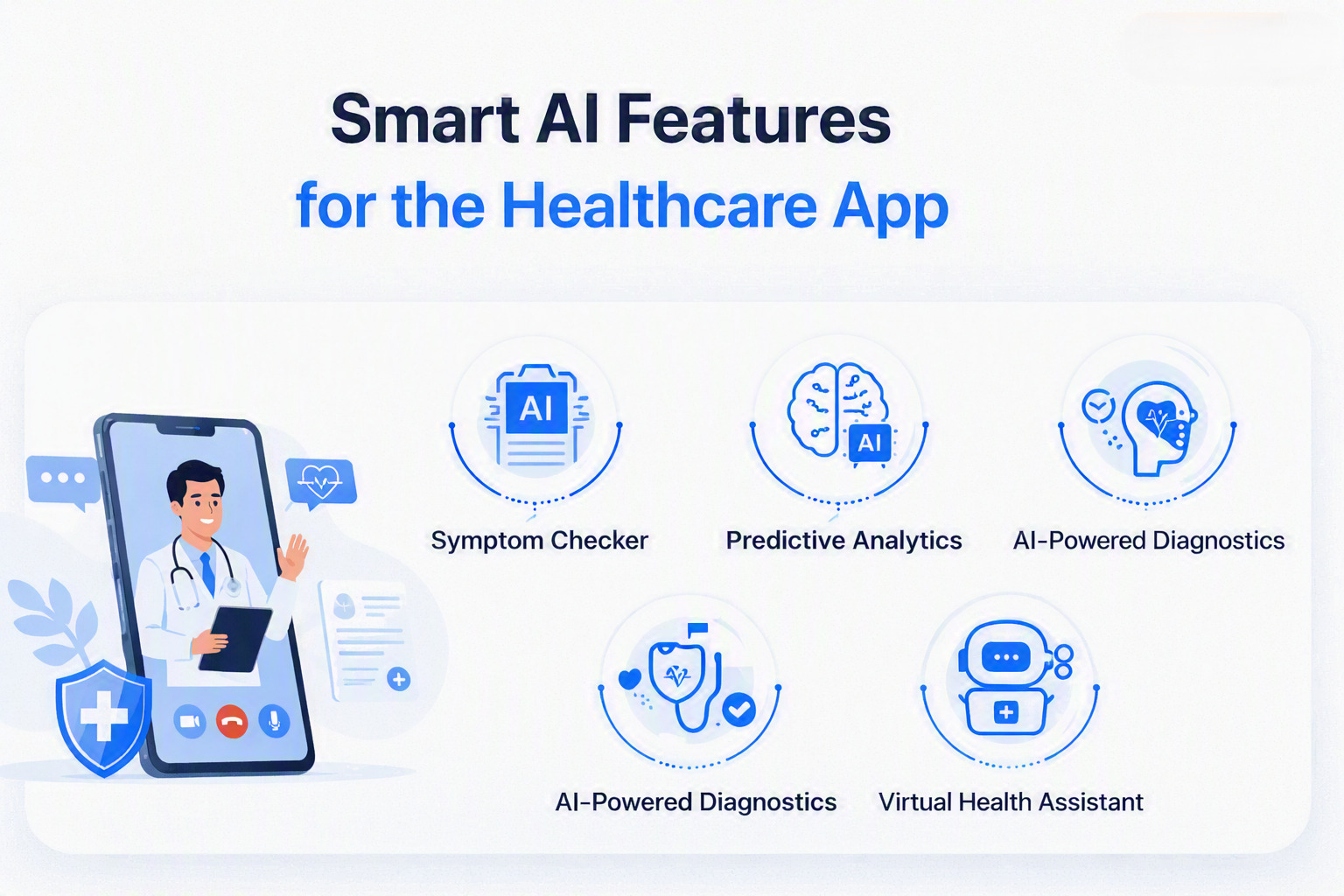
Artificial Intelligence has become one of the biggest innovations in Healthcare App Development.
AI-Powered Features
Symptom Checker
AI analyses symptoms and recommends appropriate care pathways.
Medical Chatbots
AI assistants answer patients’ questions 24/7.
Predictive Analytics
Hospitals identify high-risk patients before complications occur.
Medical Image Analysis
AI assists radiologists in detecting abnormalities more accurately.
Voice Recognition
Doctors create clinical notes through speech-to-text technology.
Personalized Treatment
AI recommends treatment plans using patient history and medical guidelines.
Medication Adherence
AI reminds patients to take medicines based on personalized schedules.
Smart Scheduling
AI automatically optimizes appointment slots.
Health Risk Prediction
Machine learning predicts diabetes, cardiovascular, disease, and other chronic illnesses.
AI significantly improves operational efficiency while reducing clinician workload, making it an essential component of modern Healthcare Mobile App Development.
Healthcare App Development Cost in Dubai
The Healthcare App Development Cost depends on several factors, including app complexity, the number of features, third-party integrations, AI capabilities, security requirements, regulatory compliance, and the overall development timeline. If your project includes telemedicine app development cost, advanced features such as HD video consultations, real-time messaging, e-prescriptions, and EMR/EHR integration can increase the overall investment due to the additional infrastructure and security requirements.
Estimated Healthcare App Development Cost
| App Complexity | Estimated Cost (USD) | Development Time |
| Basic Healthcare App | $20,000–40,000 | 3–5 months |
| Medium Complexity Healthcare App | $40,000–80,000 | 5–8 months |
| Enterprise Healthcare Platform | $80,000–180,000+ | 8–14 months |
| AI-powered Healthcare App | $120,000–300,000+ | 10–16 months |
| Telemedicine App Development | $60,000–200,000+ | 6–12 months |
Cost Breakdown for the Healthcare App Development
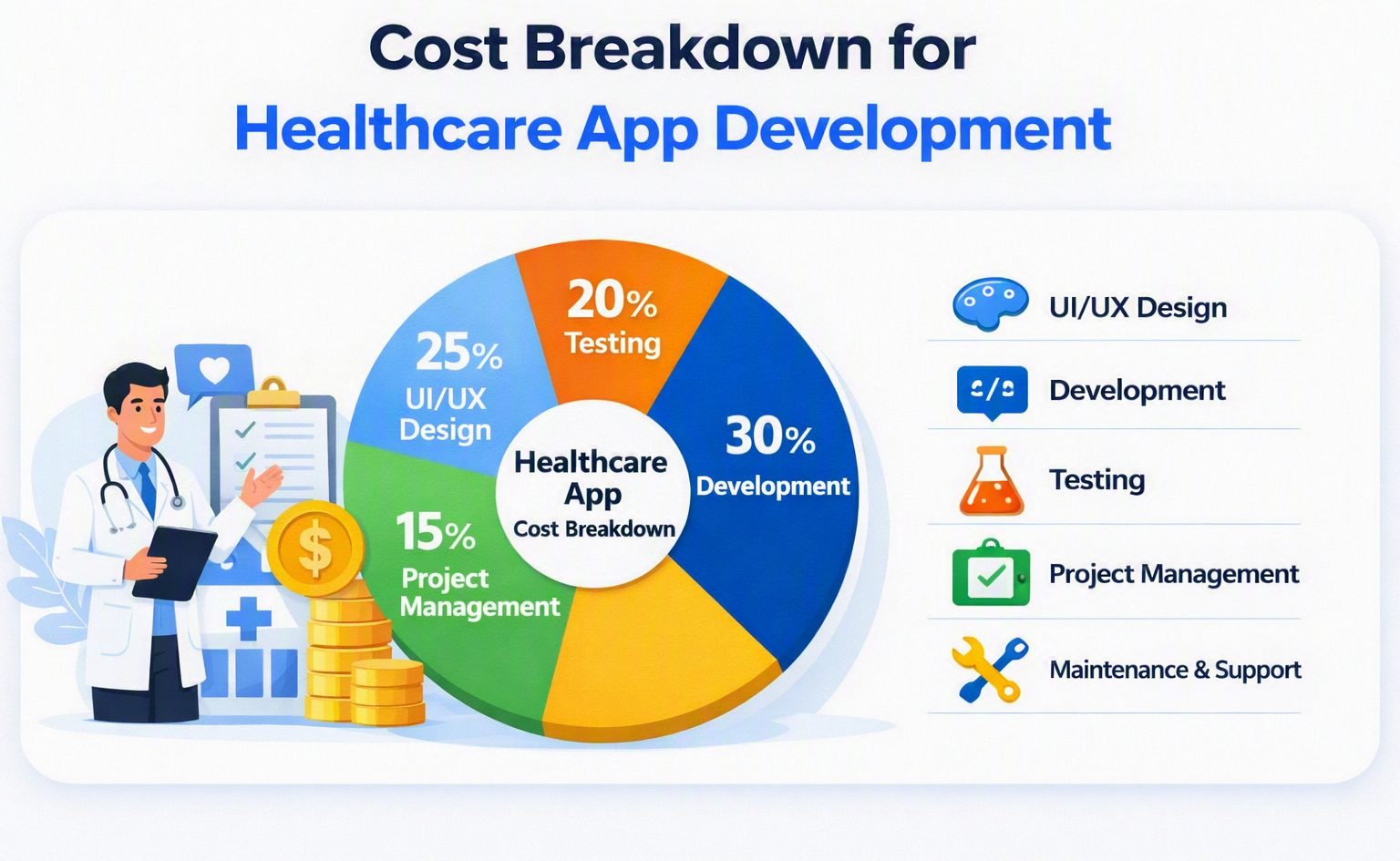
| Component | Share of Budget |
| UI/UX Design | 10–15% |
| Frontend Development | 20–25% |
| Backend Development | 25–30% |
| AI Features | 15–25% |
| API Integration | 10–15% |
| Testing & QA | 10–15% |
| Compliance & Security | 10–20% |
A reliable Healthcare App Development Company in Dubai carefully allocates the budget across these components to ensure the application is secure, scalable, and compliant. Whether you’re building a patient portal, an AI-powered healthcare solution, or investing in telemedicine app development, partnering with experienced healthcare app developers helps optimize costs while delivering a high-quality digital healthcare solution.
Factors Affecting Healthcare App Development Cost
Several factors influence project pricing:
-
Number of platforms (Android, iOS, Web): Developing for multiple platforms increases development time, testing efforts, and overall project cost.
-
AI integration: Features such as AI chatbots, predictive analytics, and symptom checkers require specialized development and additional investment.
-
EMR/EHR integration: Connecting the app with Electronic Medical Records (EMR) or Electronic Health Records (EHR) systems adds complexity and development efforts.
- Telemedicine capabilities: Video consultations, secure messaging, and remote patient monitoring increase infrastructure and implementation cost.
- IoT wearable connectivity: Integrating wearable devices for real-time health monitoring requires additional APIs and device compatibility testing.
- Third-party APIs: Payment gateways, pharmacy systems, laboratory services, and insurance APIs contribute to integration costs.
- Security requirements: Advanced security features such as encryption, multi-factor authentication, and secure data storage increase development costs.
- Compliance certifications: Meeting standards like HIPAA, GDPR, and UAE PDPL requires additional development, documentation, and security measures.
- Cloud infrastructure: Scalable cloud hosting, databases, backups, and server management influence the overall project budget.
- Maintenance: Regular updates, bug fixes, security patches, and feature enhancements contribute to long-term application costs.
The more advanced and feature-rich the healthcare application, the greater the investment required for development, compliance, and ongoing maintenance.
Healthcare App Compliance Guidelines in Dubai, UAE
Healthcare applications handle highly sensitive patient information. Compliance is mandatory.
UAE Data Protection
Healthcare apps must comply with:
- UAE Personal Data Protection Law (PDPL):
The UAE Personal Data Protection Law (PDPL) governs how personal and sensitive data, including health information, is collected, processed, stored, and shared. It requires healthcare organizations to obtain patient consent, implement strong data security measures, and protect individuals’ privacy rights.
- Dubai Health Authority (DHA) regulations:
The Dubai Health Authority (DHA) establishes standards for healthcare providers and digital health solutions operating in Dubai. Healthcare apps must comply with DHA guidelines for patient data management, electronic medical records (EMRs), telemedicine services, and the secure delivery of healthcare.
- Dubai Electronic Security Center (DESC) guidelines:
The Dubai Electronic Security Center (DESC) provides cybersecurity policies and best practices for government and critical sectors, including healthcare. Its guidelines help healthcare applications strengthen cyber resilience through secure system architecture, risk management, encryption, incident response, and continuous security monitoring.
International Standards
Many healthcare app developers also implement:
- HIPAA (US)
- GDPR (Europe)
- ISO 27001
- HL7
- FHIR
- SOC 2
Understanding NABIDH and Its Importance in Healthcare App Development
NABIDH (Network & Analysis Backbone for Integrated Dubai Health) is Dubai’s unified health information exchange platform developed by the Dubai Health Authority (DHA) to securely connect hospitals, clinics, laboratories, pharmacies, and other healthcare providers. During Healthcare App Development, integrating with NABIDH enables authorised healthcare professionals to securely access and exchange patient health records in real time, improving care coordination, reducing duplicate tests, and enhancing clinical decision-making. For healthcare apps operating in Dubai, NABIDH integration also supports regulatory compliance, strengthens data security, and ensures interoperability across the emirate’s healthcare ecosystem, making it a key consideration for modern healthcare application development.
Essential Security Measures for Healthcare App Development
Healthcare applications should include:
- End-to-end encryption
Encrypts patient data during transmission and storage so that only authorised users can access sensitive medical information. It prevents unauthorized interception and protects patient privacy.
- Multi-factor authentication
Requires users to verify their identity using two or more authentication methods, such as password and a one-time code. This adds an extra layer of security against unauthorised access.
- Role-based access
Grants system access based on a user’s role, ensuring doctors, nurses, administrators, and patients only view information relevant to them. This minimises data exposure and enhances security.
- Audit logs
Records every user activity, including logins, data updates, and record access. These logs help monitor system usage, investigate incidents, and support regulatory compliance.
- Secure cloud hosting
Stores healthcare data on protected cloud infrastructure with advanced security measures, regular monitoring, and disaster recovery capabilities. It ensures high availability while safeguarding sensitive information.
- Data backup
Automatically creates secure copies of patient records to prevent data loss caused by system failures, cyberattacks, or accidental deletion. Regular backups support quick data recovery and business continuity.
- API security
Protects data exchanged between healthcare applications and third-party systems through secure authentication, encryption, and access controls. This prevents unauthorized and API-based cyber threats.
- Device authentication
Verifies trusted devices before allowing access to healthcare systems, reducing the risk of unauthorised logins from unknown or compromised devices. It strengthens overall application security.
- Consent management
Allows patients to grant, review, or withdraw permission for sharing their personal health information. This promotes transparency, respects patient privacy, and helps organisations comply with data protection regulations.
Compliance builds patient trust while avoiding legal risks.
Healthcare Apps for iPhone vs Android
Many healthcare providers choose to launch their applications on both iOS and Android to maximise user reach and deliver a seamless patient experience. A trusted mobile app development company in Dubai can help businesses determine the right platform strategy based on their target audience, budget, and long-term goals.
| Feature | iOS App Development | Android App Development |
| Security | Excellent security with Apple’s strict App Store guidelines and robust privacy features. | Excellent security with advanced encryption and Google Play security standards. |
| Development Cost | Generally higher due to Apple’s design standards, testing requirements, and premium ecosystem. | Moderate, though costs may increase when supporting multiple device manufacturers and screen sizes. |
| Enterprise Adoption | Very high among hospitals, private healthcare providers, and premium healthcare organisations. | High adoption across public healthcare providers, startups, and large patient populations. |
| Device Variety | The limited range of Apple devices simplifies testing and ensures consistent performance. | Extensive range of smartphones and tablets requires broader compatibility testing. |
| Market Reach | Strong presence among premium users and medical professionals with Apple devices. | Larger global user base, making it ideal for reaching a wider patient audience. |
| User Experience | Delivers a highly consistent and intuitive interface with smooth performance across all supported devices. | Offers flexible user experiences that can be customized for a diverse range of devices and user needs. |
| Maintenance & Updates | Easier maintenance due to fewer device models and faster OS adoption. | Requires continuous optimisation to support multiple Android versions and manufacturers. |
| Best Use Cases | Ideal for premium healthcare apps, hospital systems, physician portals, and executive healthcare services. | Best suited for telemedicine platforms, patient engagement apps, pharmacy apps, and mass-market healthcare solutions. |
Whether you choose iOS app development, Android app development, or a cross-platform approach, partnering with an experienced mobile app development company in Dubai ensures your healthcare app is secure, scalable, compliant, and delivers an exceptional user experience. Many healthcare apps for iPhone cater to premium healthcare providers and medical professionals, while Android applications provide broader accessibility, helping organisations reach a larger and more diverse patient population.
Technology Stack for the Healthcare App Development
Modern Healthcare Mobile App Development Company in Dubai, UAE projects commonly use:
| Layer | Technologies |
| Frontend | Flutter, React Native, Swift, Kotlin |
| Backend | Node.js, .NET, Java, Python |
| Database | PostgreSQL, MongoDB |
| Cloud | AWS, Azure, Google Cloud |
| AI | TensorFlow, OpenAI APIs, PyTorch |
| Video Calling | WebRTC |
| Notifications | Firebase |
| Analytics | Power BI, Google Analytics |
How to Choose the Right Healthcare App Development Company
Selecting the right Healthcare App Development Company in Dubai, UAE can determine the success of your healthcare initiative.
Consider:
- Healthcare industry expertise
- AI capabilities
- Compliance experience
- Strong UI/UX portfolio
- Cloud architecture expertise
- Agile development process
- Post-launch maintenance
An experienced Healthcare Mobile App Development Company in UAE understands regulatory requirements, clinical workflows, and scalable architecture, ensuring a secure and future-ready solution.
Step-by-Step Healthcare App Development Process At Aarmeh
At Aarmeh, we follow an agile and compliance-driven approach to healthcare app development, ensuring every solution is secure, scalable, and tailored to the needs of healthcare providers, patients, and regulatory authorities.
| Step | Process | What Aarmeh Delivers |
| 1. Discovery & Requirement Analysis | We begin by understanding your business goals, target users, healthcare workflows, and compliance requirements. | Requirement gathering, competitor analysis, feature roadmap, project scope. |
| 2. Healthcare Strategy & Consultation | Our experts define the best technology stack, app architecture, AI capabilities, and integration strategy. | Technical consultation, MVP planning, AI roadmap, cloud strategy. |
| 3. UI/UX Design & Prototyping | We design intuitive and accessible interfaces for patients, doctors, and administrators, focusing on seamless user experiences. | Wireframes, interactive prototypes, user journey mapping, responsive UI design. |
| 4. Compliance & Security Planning | Security is embedded from the start to meet healthcare regulations and protect sensitive patient data. | HIPAA/GDPR-ready architecture, encryption strategy, role-based access, secure authentication. |
| 5. Healthcare App Development | Our developers build scalable mobile and web applications using modern technologies for iOS, Android, and cross-platform solutions. | Frontend, backend, APIs, database development, cloud infrastructure. |
| 6. AI & Advanced Feature Integration | We integrate intelligent capabilities to improve healthcare delivery and operational efficiency. | AI-powered chatbots, symptom checker, predictive analytics, telemedicine, wearable integration. |
| 7. Third-Party System Integration | We connect your app with existing healthcare systems for a unified digital ecosystem. | EMR/EHR integration, payment gateways, pharmacy systems, laboratory APIs, insurance platforms. |
| 8. Quality Assurance & Testing | Every feature undergoes rigorous testing to ensure performance, security, and reliability. | Functional testing, security testing, performance testing, usability testing, device compatibility. |
| 9. Deployment & Launch | Once approved, we deploy the application to production environments and app stores. | App Store & Google Play deployment, cloud configuration, launch support. |
| 10. Ongoing Maintenance & Support | We continuously monitor, optimize, and enhance the application after launch to ensure long-term success. | Performance monitoring, feature updates, security patches, technical support, scalability improvements. |
Future Trends in Healthcare App Development
Healthcare technology continues to evolve rapidly.
Emerging innovations include:
- AI-powered clinical decision support: AI helps healthcare professionals make faster and more accurate clinical decisions using real-time patient data.
- Digital therapeutics: Software-based treatments are used to prevent, manage, or treat medical conditions alongside traditional care.
- Wearable device integration: Smartwatches and fitness trackers continuously monitor vital signs and share health data with healthcare providers.
- Remote patient monitoring: Connected devices enable doctors to monitor patients’ health remotely, reducing the need for frequent hospital visits.
- IoT-enabled healthcare ecosystems: Internet of Things (IoT) devices connect medical equipment and systems to improve care coordination and operational efficiency.
- Voice-enabled healthcare assistants: Voice AI allows patients and clinicians to access medical information, schedule appointments, and document records hands-free.
- Blockchain for medical records: Blockchain technology ensures secure, tamper-proof, and transparent storage and sharing of patient health records.
- Augmented Reality for medical training: AR provides immersive simulations that enhance medical education, surgical planning, and clinical training.
- Predictive analytics for preventive care: Advanced analytics identifies health risks early enabling proactive interventions and better patient outcomes.
- Generative AI for clinical documentation: Generative AI automates the creation of clinical notes, discharge summaries, and medical reports, reducing administrative workload.
These innovations are set to transform Healthcare Application Development, making healthcare solutions more intelligent, connected, secure, and patient-centric over the coming decade.
Why Choose Aarmeh for Healthcare App Development?
Aarmeh combines healthcare expertise with cutting-edge technologies to build secure, AI-powered digital healthcare solutions. Our team specialises in custom healthcare app development, healthcare mobile app development for iOS and Android, telemedicine app development, AI in Healthcare App Development, EMR/EHR Integration, cloud-native healthcare platforms, and HIPAA- and GDPR-ready security frameworks. From strategy and UI/UX Design Services to development, deployment, and ongoing maintenance, we follow a structured, agile approach to build high-performance healthcare applications that enhance patient engagement, streamline clinical workflows, ensure regulatory compliance, and support long-term digital transformation.
Conclusion
Healthcare organizations in Dubai are rapidly adopting digital solutions to enhance patient experiences, improve operational efficiency, and meet evolving regulatory standards. Investing in Healthcare App Development enables hospitals, clinics, and startups, to deliver secure, scalable, and patient-centric services.
Whether you’re building healthcare mobile apps, launching a telemedicine platform, or integrating AI App Development, partnering with an experienced Healthcare App Development Company is essential. From compliance and cybersecurity to advanced AI capabilities and seamless user experiences, the right development partner can transform your healthcare vision into a future-ready digital platform that improves outcomes for both patients and providers.
Frequently Asked Questions (FAQs)
Q. How much does Healthcare App Development cost in Dubai?
The cost typically ranges from USD 20,000 to USD 30,000+, depending on app complexity, AI capabilities, integrations, platform selection, and compliance requirements.
Q. What are the must-have features in healthcare mobile apps?
Essential features include appointment scheduling, telemedicine, electronic health records, secure messaging, payment integration, medication reminders, AI-powered symptom checking, and patient health tracking.
Q. Why is AI important in Healthcare App Development?
AI enhances healthcare apps by enabling predictive analytics, virtual health assistants, automated clinical documentation, personalized treatment recommendations, medical image analysis, and intelligent patient engagement.
Q. Which compliance standards should healthcare apps follow?
Healthcare apps should comply with UAE Personal Data Protection Law (PDPL), Dubai Health Authority (DHA) regulations, and international standards such as HIPAA, GDPR, ISO 27001, HL7, and FHIR, depending on the target market.


 Book a call




 CLUTCH VERIFIED
 Top App Developer UAE
 100% NDA Protected
 IN THE HEART OF UAE